
Types of rivets: A guide to rivets, blind rivets, solid rivets, etc.
Published on 27 February 2025
The big rivet guide: types, materials and applications
Riveting is one of the oldest and most reliable joining technologies. It provides durable joints that can withstand high loads. Rivets are used in numerous applications, from construction and mechanical engineering to DIY projects.
Choosing the right rivet is crucial for the stability and durability of a connection. But even experienced craftsmen sometimes lose track of the options, given the many different types available.
This guide explains the most important rivet types, their materials and applications. This way, you can find the right solution for your projects – whether blind rivets, solid rivets or semi-hollow rivets.
Inhalt
Basic principles: what are rivets?
Overview of the different types of rivet
Solid rivets
Blind rivets
Semi-tubular rivets
Instructions: how to find the right rivet
Conclusion
Frequently asked questions
Basic principles: what are rivets?
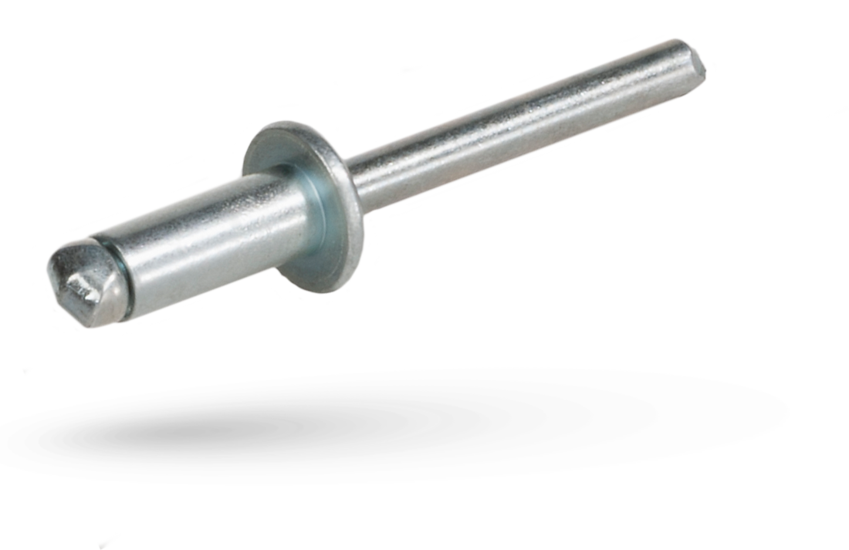
Blind rivets consist of a cylindrical shaft, the so-called blind rivet head, with a head. When riveting, the other end, the mandrel, is plastically deformed to create a firm connection. This ensures long-lasting stability, even under high loads. Solid rivets consist of a solid shaft with a rivet head at the end. The difference between these and semi-tubular rivets is that the rivet nut body of the former is partly solid and partly hollow. Like blind rivets, solid and semi-tubular rivets are used to create permanent joints. The main difference is that blind rivets only require access to the workpiece from one side, whereas solid and semi-tubular rivets require access to the workpiece from both sides to create the joint.
Rivets are used in many areas – here are a few examples:
- Construction: fastening steel girders and bridge elements.
- Mechanical engineering: assembling robust machine components.
- Furniture making: decorative and functional applications.
- Aerospace: lightweight and high-strength fastenings.
- Access technology: assembling ladders and scaffolding.
- White goods: Fasteners in household appliances such as washing machines.
- Automotive engineering: Fastening of components, e.g. battery holders for electric vehicles.
- DIY: Practical solutions for hobbyists.
Rivets offer numerous advantages over other joining technologies. They impress with their high stability and create durable connections that can withstand even strong vibrations.
Their high resistance to high loads and weather conditions makes them particularly reliable in demanding applications. Many materials, such as aluminium or stainless steel, also provide effective corrosion protection and prevent rust formation in the connection.
Some rivet types even offer watertight connections, making them ideal for outdoor bits. Another advantage is their non-detachability – unlike screws, rivets cannot come loose on their own, which guarantees additional safety.

An overview of the different types of rivets
Rivets can be categorised by material and application:
Materials:
- Aluminium: light and corrosion resistant – perfect for outdoor use.
- Steel: robust solution for heavy loads and load-bearing structures.
- Copper: visually appealing and rustproof – e.g. for plumbing work.
Applications:
- High loads: solid rivets provide maximum stability.
- Strong connections, slightly elastic: semi-tubular rivets as axles for wheels, rollers and joints.
- Hard-to-reach places: blind rivets allow for easy assembly.
Solid rivet

Solid rivets are generally manufactured according to DIN standards 660, 661 and 7338 and consist of a solid rivet nut body with a head. The other end is compressed during assembly to firmly connect the components.
Solid rivets have historically been used in bridge and shipbuilding. Today, they are frequently used in steel structures and in heavy-duty mechanical engineering, where high strength is required.
Solid rivets require force and special tools to process. They are either installed manually with a hammer using a cold process or mechanically in large applications using a warm process.
Blind rivet

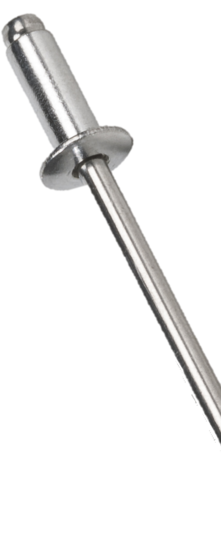
Blind rivets consist of a blind rivet head and a mandrel. The mandrel pulls the body together until it deforms and creates a firm connection. The residual mandrel then breaks off.
Note: The term ‘POP® rivet’ is often used as a synonym for blind rivets. In fact, it is a brand name.
Blind rivets offer the major advantage that they can be installed from just one side. This makes them particularly suitable for applications in hard-to-reach places where it is not possible to work on both sides.
They are frequently used in vehicle construction, in housings and in sheet metal. Thanks to their versatility, blind rivets are also in frequent use in DIY projects, where they impress with easy handling and reliable connections.
Semi tubular rivet

The semi-tubular rivet is a classic one-piece connecting element for two-sided processing. The axial bore is what distinguishes it from the solid rivet. The rivet nut body is partly solid and partly hollow.
Like solid rivets, semi-tubular rivets are also manufactured by cold forming in a pressing process.
The connection is formed by applying axial pressure to the end of the shaft. The semi-tubular rivets are spread or flanged at the open end by a mandrel, instead of being formed into a head.
Instructions: How to find the right rivets
Use this step-by-step guide to find the ideal solution for your applications:
1. analyse the area of application
Consider what function the rivets should fulfil. Do you need a high load-bearing capacity, a visually attractive solution or a weatherproof connection?
Examples:
- High loads: solid rivets for load-bearing steel structures.
- Difficult-to-reach places: blind rivets for housings, bodies or sheets.
- Safety-related applications: semi-tubular rivets as rivets in clutch and brake linings.
2. Check materials and properties
Choose a material that suits your application:
- Aluminium: light, corrosion-resistant and easy to work with.
- Steel: very strong and suitable for high loads.
- Copper or brass: Attractive and corrosion resistant – ideal for decorations and humid environments.
- Stainless steel: Rust-free and durable – perfect for outdoor applications.
3. Determine the assembly process
Check which tools and accessories are required:
- Blind rivets: Easy assembly with a hand rivet tool. Battery-powered or pneumatic blind rivet tools are also available.
- Solid rivets: Manual or machine processing with hammers or riveting machines.
4. Consider the look and design
If the rivets remain visible, the look plays an important role. Glossy surfaces or special head shapes improve the aesthetics. Blind rivets are available in a range of RAL colours, which means that they can be used in coloured applications, such as exterior facades, to perfectly blend in with the overall look, so that the connection is barely noticeable.
5. Perform a test assembly
Before you set the final rivets, you should perform a test on a sample. This will ensure that the materials, tools and accessories are compatible.
Conclusion

Rivets are versatile fasteners used in countless applications. They provide durable joints that remain reliable even under high loads.
Key insights:
- Solid rivets are suitable for particularly stable and load-bearing steel constructions.
- Blind rivets allow for easy assembly from one side – ideal for locations that are only accessible from one side.
- Semi-hollow rivets also provide a strong connection and are often used as rivets in clutch and brake linings.
The choice of the right rivets depends on the materials, the application and the tools available. This guide will help you to decide which rivets are best suited to your needs.
For high-quality blind rivets, tools and accessories, put your trust in GESIPA®. The company offers innovative solutions for professional and DIY applications. GESIPA® blind rivets allow you to create reliable joints that are quick, easy and safe to use.
Frequently asked questions
What riveting methods are there?
The best-known methods include solid rivets, blind rivets and punch rivets.
With solid rivets, you permanently reshape the rivet by compressing or deforming it. This method is particularly suitable for stable and load-bearing connections.
Blind rivets are used when you only have access to the component from one side. They are ideal for hard-to-reach places and can be installed quickly and easily, which is why they can be used anywhere materials need to be permanently joined.
Self-pierce rivets join components by penetrating and simultaneously deforming the material. This process is often used in industrial manufacturing because it is efficient and precise.
Why are blind rivets so called?
Blind rivets are so named because you can set these rivets without seeing or reaching the back of the component. You work ‘blindly’ on the hidden side. This makes blind rivets ideal for applications where you only have access from one side, for example with closed housings or tubes.
